Planning and project development
- Energy planning
- Customer education
- System strategy
- Project development
Solar, batteries, generators, and your electrical panel have to work together. AER helps Arizona homeowners, ranches, and businesses plan that out before choosing equipment.
Start with the operating question. What needs to run, what needs to start, and what needs to last?
Arizona Energy Resilience provides energy planning, customer education, system strategy, and project development for solar, battery backup, generator, hybrid, grid-tied, and off-grid systems.
Where a project requires licensed contracting, electrical work, permitting, or installation, that work is performed by our licensed contractor partner, Connolly Electric & Mechanical (ROC 138415 · ROC 126606 · ROC 298346), as applicable to the project scope.
Connolly Electric & Mechanical · ROC 138415 · ROC 126606 · ROC 298346
Arizona Energy Resilience provides planning, education, and system design. Licensed contracting, electrical work, permitting, and installation are performed by our contractor partner, Connolly Electric & Mechanical (Chris Connolly Inc.): ROC 138415, residential electrical · ROC 126606, commercial electrical · ROC 298346, air conditioning and refrigeration.
Most properties need a few of these working together. Planning starts with what the property needs to do, and the equipment follows.
Sized from your actual usage, with a clear view of what it does and doesn't do in an outage.
Solar, storage, and the grid working together, with the backup boundary decided up front.
Cabins, ranches, and remote homes planned around winter production, surge loads, and generator support.
Stored energy and output power sized for the loads you actually need to keep running.
A generator that works with your batteries instead of fighting them.
Water, refrigeration, medical equipment, and internet, with motor starting checked first.
Smart panels that manage loads so stored energy goes where it matters most.
Charging planned with your panel capacity, solar, and future vehicles in mind.
When the main panel or service size limits solar, batteries, or charging, it gets planned in from the start.
Adding batteries, expanding, or sorting out a system that isn't doing what you expected.
Operations, critical equipment, and phasing for properties that don't fit a residential template.
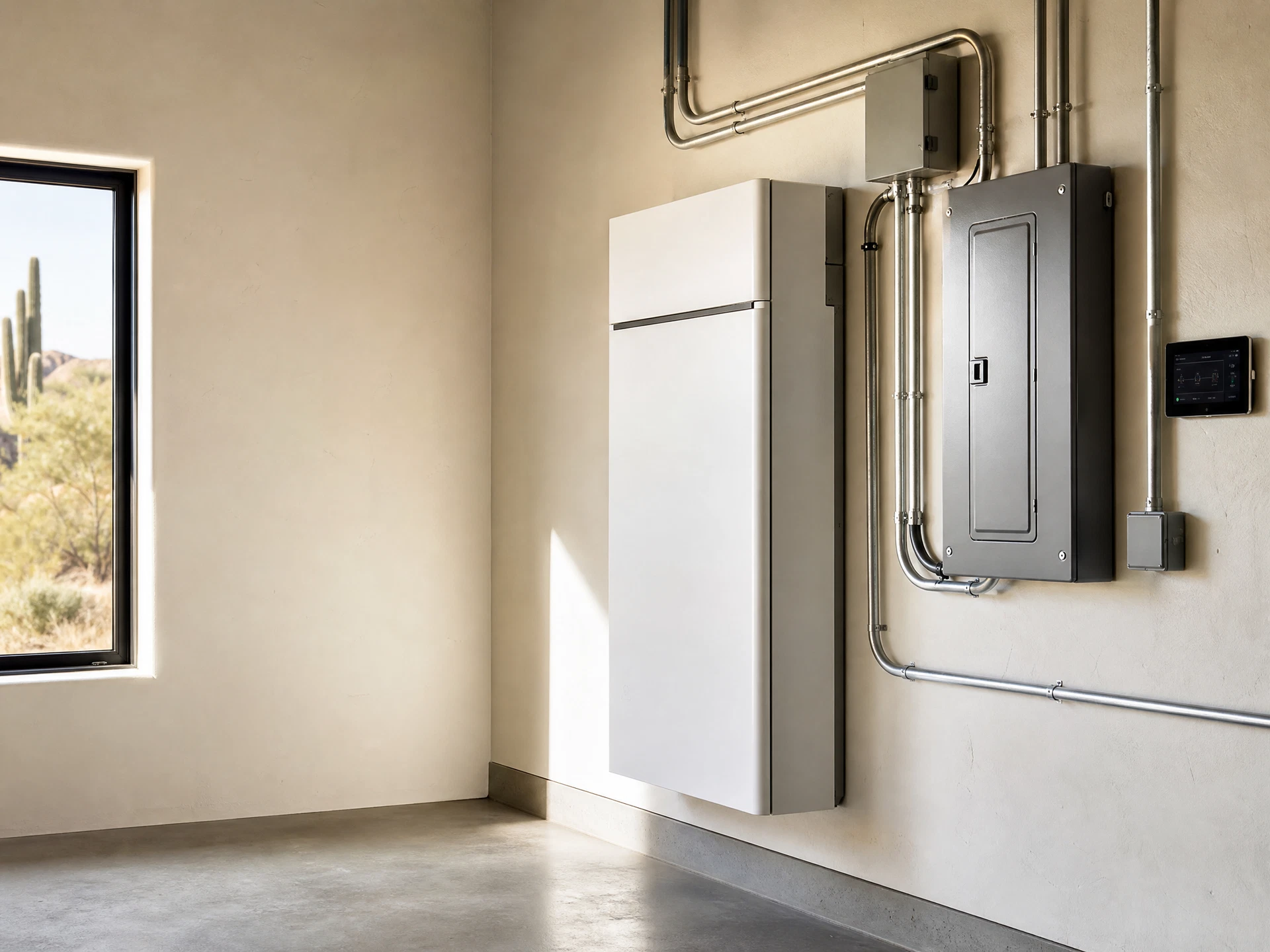
A well pump or A/C compressor needs a burst of power just to start. A battery can hold plenty of energy and still not deliver enough at once. A grid-tied system without storage usually turns off with the grid. These details decide whether the water, the fridge, and the lights stay on, so they get worked out before equipment is chosen.
List the loads that matter during an outage, and the ones that can wait.
Runtime, simultaneous loads, and motor starting are separate checks.
EVs, added batteries, a shop, a well, or a generator are easier to plan for now than to retrofit later.
Pick a situation and watch the colored dots move. They show what a system like this is doing at that moment, and why a grid-tied system behaves differently from one with a battery.
Your solar powers your home first, tops off the battery, and any extra can go back to the grid, depending on your utility plan.
Illustration only. A real design depends on your equipment, the loads you choose to back up, and a site review.
Both tools give you a preliminary starting point to bring to a project review. Final design depends on a site evaluation, electrical review, permitting, and utility requirements.
Start from your usage or APS bill, choose what you'd want running in an outage, and see a preliminary solar size and battery concept.
Use the Energy PlannerFor cabins, ranches, and remote homes: daily energy, surge loads, storage, and generator support, laid out step by step.
Start an Off-Grid ReviewThese questions come up again and again with homeowners, ranches, and businesses. Customer names and project details stay private.
Plenty of stored energy and not enough start-up power is a common mismatch. On rural properties, the well pump's surge is one of the first things we check.
Many homeowners assume panels keep the house running in an outage. Without a battery and the right backup configuration, a grid-tied system typically goes down with the grid.
One battery rarely runs central A/C, an electric range, and a well pump at the same time. Deciding on critical loads first keeps expectations honest.
The existing inverter, panel, and wiring decide what's practical. We look at what's already installed before talking equipment.
Short winter days and stretches of cloudy weather can outlast a battery. A generator coordinated with storage can cover the gap that solar alone can't.
SPAN-style load management can stretch a battery by shedding what you don't need. It's a design choice, not a substitute for sizing the system correctly.
You'll know what happens at each step and who handles it. Nothing is committed until the design and proposal make sense to you.
A conversation about what you want the system to do: lower bills, outage backup, off-grid living, EV charging, or some mix.
Your APS bill or 12 months of usage. Real numbers beat guesses, and they keep the system from being oversized or undersized.
Send Kent Your APS BillRoof or ground space, shading, the main panel and service size, the well pump, and where equipment can actually go.
Panels, batteries, inverters, generator support, and critical loads sized around how your property runs, not a preset package.
A written proposal from Connolly Electric & Mechanical (ROC 138415 · ROC 126606 · ROC 298346) that lays out the system, the assumptions behind it, and what it will and won't do.
Licensed contracting, electrical work, permitting, and installation are performed by our licensed contractor partner, Connolly Electric & Mechanical, as applicable to the project scope.
The system is set up, tested, and configured, including backup settings and monitoring, then walked through with you.
Questions after installation, monitoring check-ins, and planning for later additions like batteries or EV charging.
Send Kent your APS bill or a quick description of your property. You'll get a straight answer about what makes sense, including when solar or batteries don't.
Prefer email? Send your bill to kent@azenergyresilience.com. Feel free to cover your account number; the usage and rate plan are what matter. Or try the Energy Planner or Off-Grid Designer first.